
Host
Suspendisse tristique vehicula ante tortor, ut auctor diam ornare ut. Pellentesque et ex et dolor tempor suscipit. Phasellus vel orci vel orci tincidunt interdum. Nunc quis viverra metus. In cursus tincidunt. Nam consequat nibh justo, non sollicitudin sem placerat vitae.
Client & task
Suspendisse tristique vehicula ante tortor, ut auctor diam ornare ut. Pellentesque et ex et dolor tempor suscipit. Phasellus vel orci vel orci tincidunt interdum. Nunc quis viverra metus. In cursus tincidunt. Nam consequat nibh justo, non sollicitudin sem placerat vitae.
Objectives
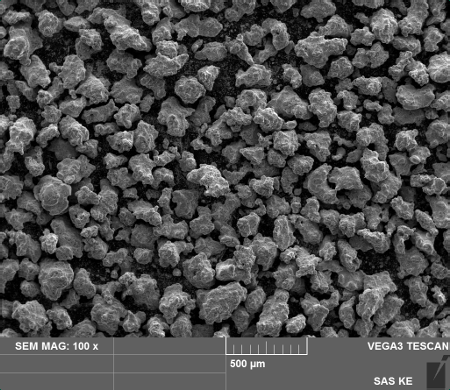
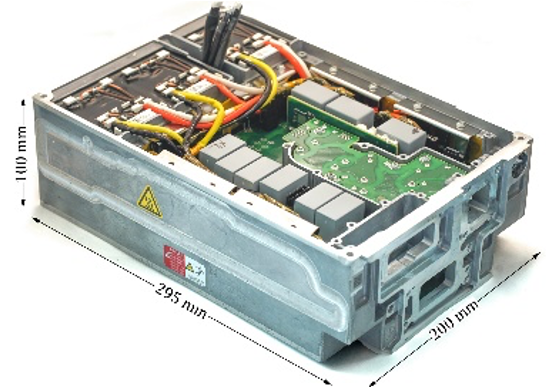
As power electronics transition to higher switching frequencies, the accurate characterisation and modelling of magnetic losses become increasingly critical for designing efficient inductive components. Modern materials—such as amorphous and nanocrystalline ribbons, soft ferrites, and soft magnetic composites (SMCs)—exhibit complex loss mechanisms that evolve significantly across wide frequency ranges and under various excitation conditions. Understanding these mechanisms, especially at MHz frequencies and under DC-bias, is essential for predicting device performance, reducing energy dissipation, and enabling next-generation high-frequency converters.
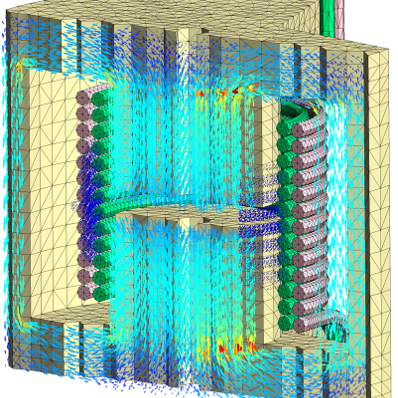
This project tackles these challenges by combining advanced broadband measurement techniques with physically grounded loss modelling. Particular attention is given to the fundamental mechanisms influencing magnetic behaviour at high frequencies, including skin effect, relaxation processes, and spin damping, ultimately bridging the gap between material physics and power electronics applications.
Objectives 1
Conduct broadband magnetic measurements (DC to MHz) on various materials like amorphous and nanocrystalline tapes, soft ferrites, and Soft Magnetic Composites (SMCs), under both sinusoidal and DC-biased induction regimes.
Objectives 2
Develop physical models for magnetic losses at higher frequencies (MHz), building upon the statistical theory of losses.
Objectives 3
Advance the physical modelling of HF losses in both conducting and non-conducting materials, examining the role of skin effect and spin damping.
Objectives 4
Investigate the influence of DC-bias on the loss response of magnetic cores in PE.

Expected Results
Lorem ipsum dolor sit amet, consectetur adipiscing elit. Phasellus et massa nec arcu efficitur ultrices. Proin laoreet neque eu ligula pretium, vel congue urna faucibus. Integer ut felis dui. Phasellus tincidunt lacus ac ex laoreet, ac ultricies quam condimentum. Vestibulum ante ipsum primis in est.
67%
Development of physical models for magnetic losses on a wide frequency range and with different induction regimes.
260%
Obtainment of physical based guidelines for the applications of soft magnetic materials in PE.

Sed fringilla gravida lorem, id rhoncus justo egestas sed. Nulla sagittis vel ante sit amet neque non tellus interdum tincidunt eget eu odio. Awesome!